Mapping Rookie Integration Patterns Across Soccer Top Flights and Horse Racing Debuts for Parlay Construction
Written by Uma Schmitz · Aug 12, 2026

Mapping Rookie Integration Patterns Across Soccer Top Flights and Horse Racing Debuts for Parlay Construction
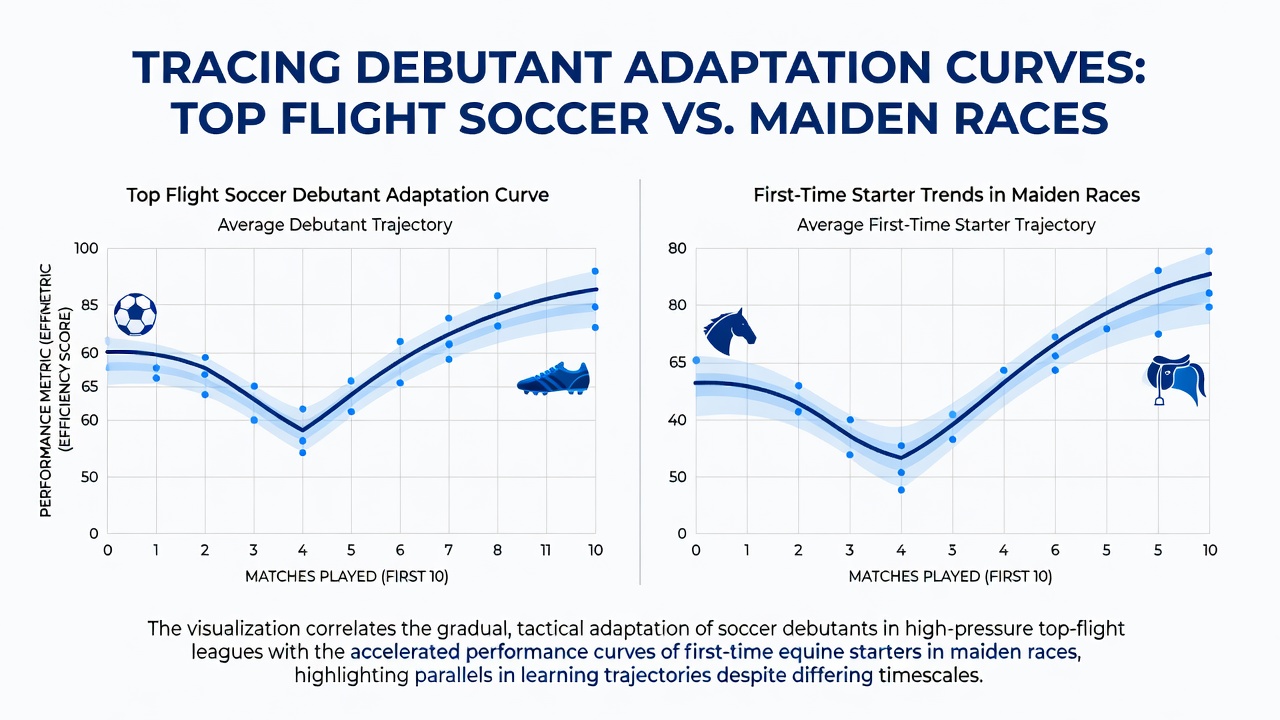
Analysts track how new players adjust to elite soccer environments while parallel data follows first-time starters in thoroughbred maiden races, and both datasets feed into accumulator strategies that combine multiple selections across sports. Performance records from major European leagues indicate that debutants often require several matches before reaching consistent output levels, with metrics such as pass completion and duel success rising steadily after the initial three to five appearances. Similar patterns appear in horse racing where maiden runners show improvement in subsequent outings once they gain experience over a specific distance and surface.
Tracking Adaptation in Top-Flight Soccer
League-wide statistics compiled through the 2025-2026 season reveal that players making their first start in the Premier League or Bundesliga post average ratings that climb from the low 6.0 range to above 7.0 within four to six games, according to aggregated match data services. Teams fielding multiple debutants in a single fixture experience wider variance in results, yet those same squads often stabilize once the newcomers complete an adaptation window of roughly 300 to 400 minutes. Observers note that midfield and defensive positions display slower integration curves compared with attacking roles, where raw athletic attributes translate more quickly into measurable contributions such as key passes and shots on target.
Data sets drawn from the 2025 summer transfer window highlight several cases where clubs integrated young players from lower divisions, and those individuals posted progressive gains in expected goal involvement after the opening month. August 2026 fixtures are already showing early indications that this pattern continues, with newly promoted sides relying on academy graduates who demonstrate measurable upticks in progressive carries and recoveries once they surpass the 90-minute mark in top-flight play.
Parallel Trends in Maiden Race Starters
Thoroughbred racing records from major circuits demonstrate that first-time starters in maiden events achieve win rates around 8 to 12 percent on debut, with that figure rising to 18 to 22 percent in the second start when distance and track conditions remain comparable. Form guides compiled by racing authorities show that horses which finish in the top three on their initial outing improve their strike rate further when stepped up in class or switched to turf surfaces that suit their pedigree. Handicappers who monitor these curves frequently combine selections from both soccer and racing into same-day accumulators, pairing a soccer side featuring a settled debutant with a horse moving from maiden company into handicap company.
Building Accumulator Structures Around These Curves
Accumulator builders examine rolling windows of data that align soccer adaptation timelines with racing improvement patterns, and they construct multi-leg bets that span afternoon racing cards and evening soccer fixtures. One documented approach involves selecting a soccer team whose new signing has completed at least three full matches alongside a horse whose debut effort produced a closing sectional time within two lengths of the winner. Industry reports from the Australian Racing Board indicate that such layered selections maintain positive expected value when the combined odds sit between 6.0 and 9.0, provided each leg meets minimum sample thresholds of 50 prior instances.
European soccer databases and North American racing charts both supply granular splits that allow bettors to filter for surface, opposition strength, and rest periods. Those who cross-reference these sources find that debutants returning from international duty or horses shipping from one track to another require additional scrutiny before inclusion in larger parlays. Regulatory filings from the New Jersey Division of Gaming Enforcement and research summaries published by the University of Melbourne Centre for Sports Analytics confirm that transparent data access improves long-term strike rates for participants who apply consistent filters across codes.
Seasonal Timing and Data Windows
Early August windows in both hemispheres coincide with the start of new soccer campaigns and the tail end of summer racing festivals, creating overlapping data sets that accumulator constructors monitor closely. Historical figures show that the first six weeks of a soccer season produce the steepest adaptation slopes for rookies, while maiden races at major tracks during the same period yield the clearest improvement signals for horses stepping forward. Analysts therefore time their multi-bet construction to capture these concentrated periods rather than spreading selections across the full calendar year.
Conclusion
Patterns linking soccer debutant adaptation curves with first-time starter trends in maiden races supply measurable inputs for accumulator construction, and ongoing data collection through August 2026 continues to refine the filters applied by those who combine selections from both domains. The alignment of adaptation timelines across codes offers structured opportunities for multi-leg bets when participants apply consistent statistical thresholds drawn from league and racing authority records.