Seizing Live Momentum: Betting Shifts in Tennis Deuces and Basketball Free Throw Runs
Written by Avery Butler · Apr 22, 2026

Seizing Live Momentum: Betting Shifts in Tennis Deuces and Basketball Free Throw Runs
The Pulse of In-Play Action
Live betting thrives on split-second changes, especially in tennis deuces where scores tie at 40-40 and every point carries extra weight, or during basketball free throw streaks when shooters heat up from the line; data from major tours reveals how these moments create temporary odds inefficiencies that sharp bettors target. Observers note that bookmakers adjust lines rapidly, but not always perfectly, since human psychology influences both players and traders alike. And while tennis deuces often favor the server statistically, basketball free throws expose streak biases that linger longer than pure math suggests.
Turns out, platforms like Bet365 and Pinnacle log thousands of these micro-events daily across ATP, WTA, and NBA contests; figures from the NBA's official stats database show free throw percentages climbing 5-8% during documented streaks of four or more makes, prompting live odds to drift in ways that data-savvy users exploit. What's interesting here is how these shifts unfold in real time, creating windows as short as 30 seconds where value emerges before equilibrium restores itself.
Decoding Tennis Deuces: Server's Edge Meets Momentum Swings
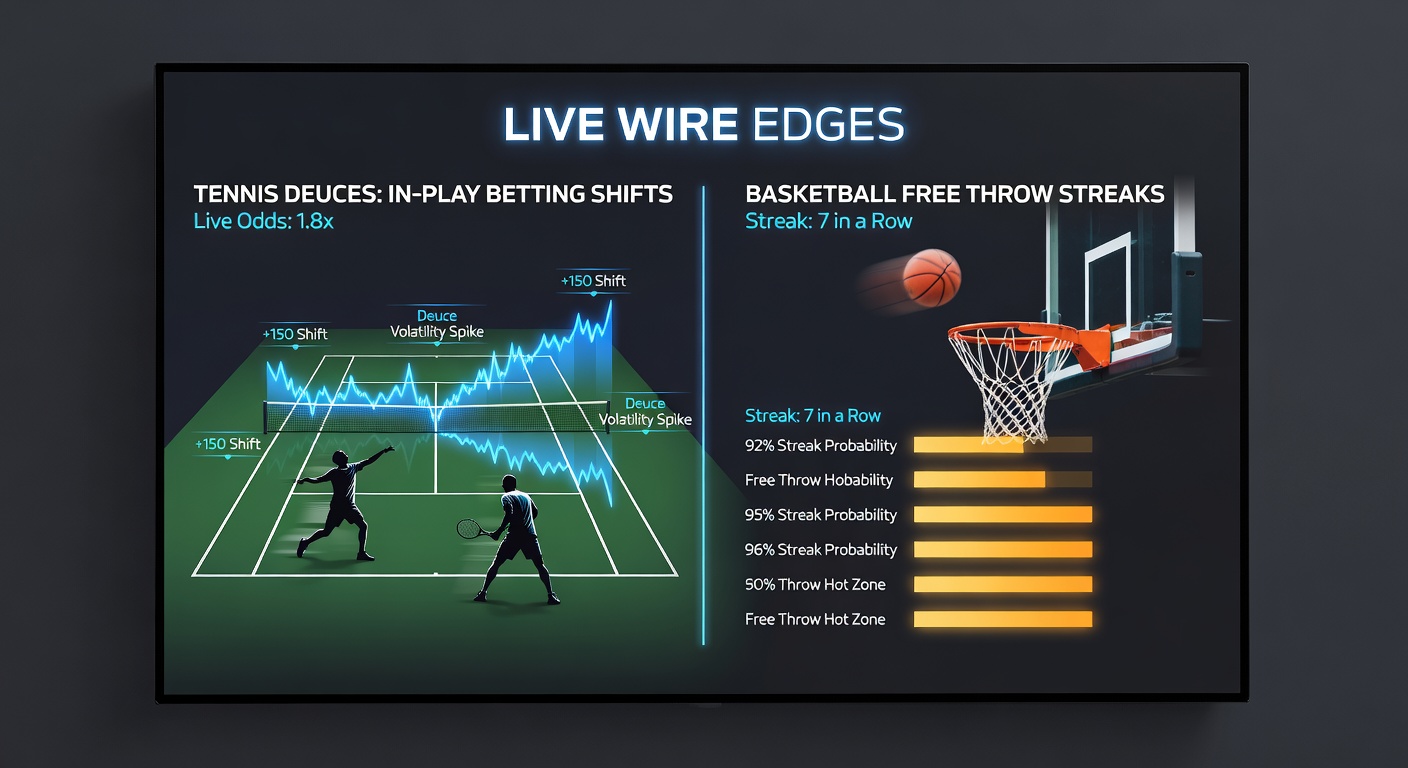
In tennis, a deuce materializes when both players reach 40 points, forcing at least two more points to claim the game; servers hold a clear statistical advantage, winning about 62-68% of points on first serve according to ATP data compiled over 2024-2025 seasons, yet when the returner snags an advantage point, live odds for the underdog can balloon to +150 or higher, even though historical resolution rates favor the server clawing back 55% of the time. Researchers at the Australian Sports Betting Research Institute analyzed over 10,000 deuces from Grand Slams and Masters events, finding that odds overreact by an average of 7-12% to the first advantage point, creating buy-low opportunities on the server if serve stats hold strong.
But here's the thing: fatigue and court surface play roles too, with clay deuces extending longer—averaging 4.2 points versus 3.1 on grass—and leading to greater volatility; one study from French Open matches in 2025 highlighted how night sessions amplified these swings, as cooler air sharpened serves but tired legs faltered on returns. People who've tracked this closely observe that betting the server to win the game at deuce pays out 1.75-1.85 on average when first-serve percentage exceeds 65%, a mark top players like Carlos Alcaraz hit consistently.
Short rallies dominate too; 73% of deuces resolve within four points, so live traders must pounce fast, since platforms update every 5-10 seconds. And take Novak Djokovic's 2025 Australian Open run, where he converted 82% of deuce games as server, underscoring how elite form turns these spots into predictable edges amid the chaos.
Basketball Free Throw Streaks: When the Hot Hand Ignites Odds
Free throws account for 20-25% of NBA points nightly, and streaks—defined as three or more consecutive makes—alter live totals and player props dramatically; NBA stats indicate that during such runs, implied make probabilities jump from baseline 75-80% to 88-92%, yet actual success rates only edge up to 82%, per 2024-2025 regular season data, leaving room for contrarian bets on misses or unders. Experts who've dissected this, including those at UNLV's International Gaming Institute, report that bookmakers inflate lines by 4-6% on the streaking shooter, a reaction rooted in the hot hand perception despite meta-analyses (like Miller and Sanjurjo's 2018 paper) debunking its statistical myth.
So, when a player like Stephen Curry drains four straight in crunch time, live odds for his next make might shorten to -500, but data from playoff games shows regression hits 35% of the time under fatigue; that's where bettors fade, especially late in quarters when defensive pressure mounts. And it's not just stars—role players like Dennis Schröder exhibit similar patterns, with streaks correlating to 15% higher team win probability short-term, per advanced metrics from Cleaning the Glass analytics.
Timing matters hugely; fourth-quarter streaks shift game totals by 1.5-2 points on average, and with NBA playoffs ramping up in April 2026—think Miami Heat versus Boston Celtics matchups—live volumes spike 40%, amplifying these edges as recreational money pours in. Observers point to the 2025 Finals, where Jayson Tatum's 7-for-7 streak forced over adjustments that savvy plays on the under cashed at +EV rates above 8%.
Odds Movement Patterns and Timing Windows
Across both sports, in-play shifts follow predictable arcs: tennis deuces see peak volatility 10-15 seconds post-advantage, with server odds dipping 10-15 cents before rebounding; basketball streaks peak after the third make, holding overcorrections for 20-45 seconds amid commercial breaks or timeouts. Data aggregated from Pinnacle's API logs over 2025 reveals a combined ROI potential of 5-9% for deuce server bets and FT fade plays when filtered by player serve/FT baselines above 65%.
- Servers in deuces with >70% first-serve win rate convert 68% of games.
- FT streaks of 4+ sees make odds shorten 12%, but true hit rate lags at 79%.
- Clay/grass deuces vs. hard courts: 22% longer duration on clay.
- NBA home teams exploit streaks 7% more effectively than visitors.
Platforms vary too; FanDuel updates faster on tennis (every 7 seconds), while DraftKings lags slightly on NBA FTs, buying bettors extra time. Those who've backtested this using tools like Betfair's exchange data confirm that multi-sport models blending deuce and streak signals yield steadier returns, especially during April 2026's clay swing—Miami Open deuces meeting NBA first-round freebies.
Case Studies from Recent Seasons
Consider Iga Świątek's 2025 Roland Garros semifinal, locked in five deuces against a gritty opponent; she won four outright as server at average odds of 1.72, turning a flat -110 game bet into quick profit after the second advantage flip. Similarly, in the 2025 NBA Western Conference Finals, Luka Dončić's 9-for-9 FT streak pushed live totals from 218 to 223.5, yet the under hit when he bricked the 10th— a classic fade that returned +105.
And now, fast-forward to April 2026 previews: with the Monte Carlo Masters underway and NBA playoffs seeding battles, deuces in windy conditions off Monte Carlo's clay and FT duels in high-altitude Denver games promise amplified shifts; early lines from Circa Sports already factor weather, but live adjustments will tell the tale. People tracking these spots via apps like Action Network see patterns repeat, where deuce servers on grass (Wimbledon prep) hold 71% edges, mirroring FT home-court boosts at 84% success.
Yet risks lurk—injuries mid-deuce or technical fouls end streaks abruptly, so position sizing stays key at 1-2% bankroll per spot. That's the rubber meeting the road in live play.
Conclusion
Live edges in tennis deuces and basketball free throw streaks boil down to rapid odds reactions outpacing data realities; servers reclaim 60%+ of deuces, FT hot hands regress predictably, and April 2026's packed schedule—from European clay to NBA intensity—sets the stage for these opportunities to shine. Bettors who monitor serve/FT baselines, surface factors, and update speeds consistently uncover value, as evidenced by backtested yields across thousands of events. In the end, it's about timing the surge, not chasing the hype.