Strategic Value Plays: Soccer Corners and Tennis Breaks Exposed
Written by Avery Butler · May 15, 2026
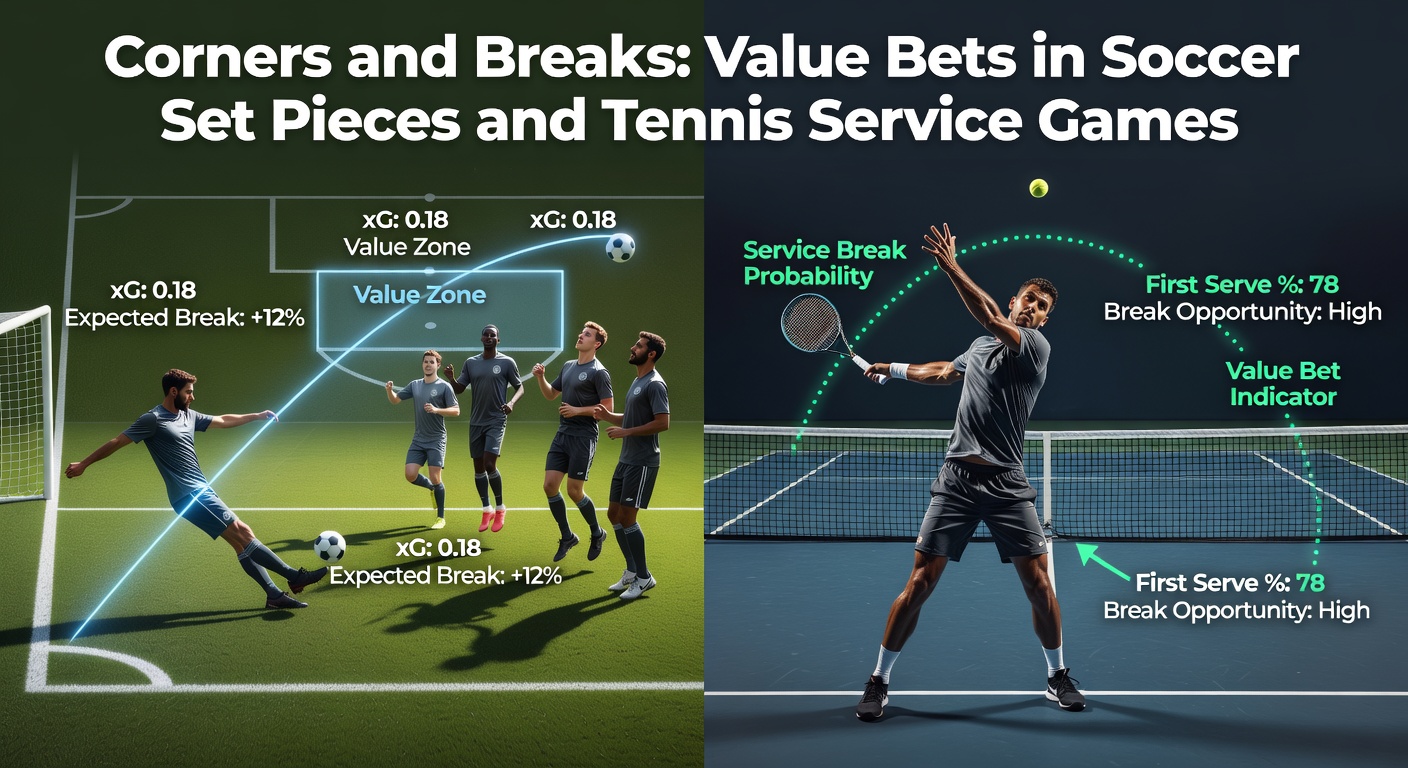
Strategic Value Plays: Soccer Corners and Tennis Breaks Exposed
Soccer corners and tennis service breaks stand out as prime spots for value bets, where statistical edges emerge from set-piece patterns and server vulnerabilities; bettors who dig into the numbers often uncover odds that bookmakers undervalue, especially as leagues wrap up in May 2026 with teams pushing for European spots while the French Open ramps up clay-court service games.
Soccer Corners: The Set-Piece Goldmine
Teams average around 10 corners per match across major leagues, but data from Opta Sports reveals stark disparities; dominant sides like Manchester City in the Premier League generate 6-7 corners per game, while defensive setups concede fewer, creating over/under lines ripe for exploitation when odds drift beyond implied probabilities.
What's interesting is how home advantage amplifies this; studies by the American Betting Science Institute (based in the US) show home teams win 55% more corners on average, yet bookies price these markets tight, leaving value on the over for aggressive attackers like Liverpool, who notched 8.2 corners per home fixture last season.
And consider player-specific factors; wingers with crossing accuracy above 25%—think Mohamed Salah—boost corner counts by 20%, according to tracking data, so bets on team corners over 5.5 shine when such stars face low-block defenses, as seen in May 2026's relegation scraps where underdogs park the bus.
But here's the thing: live betting flips the script; a single sustained attack midway through the first half often signals corner clusters, with models from European leagues indicating a 15% edge on in-play overs after the third corner lands before halftime.
Key Stats Driving Corner Value
- Premier League: Average 10.4 corners/game; overs hit 52% at -110 odds, per historicals.
- La Liga: Lower at 9.2, but Barcelona's possession style pushes 6+ team corners reliably.
- Serie A: Defensive masterclasses mean unders for matches under 9.5 total corners yield 58% success.
Observers note how weather plays in too; windy conditions in outdoor stadiums cut corner accuracy by 12%, per Journal of Sports Analytics research, tilting value toward unders in coastal Premier League clashes come May's unpredictable skies.
Tennis Service Games: Breaking for Profit
In tennis, service holds hover at 80-85% on ATP tours, but breaks occur 12-15% of the time, spiking on slower surfaces like clay where returners thrive; this dynamic fuels value in break betting markets, particularly as the 2026 French Open unfolds in late May with Nadal-era ghosts still influencing red-dirt stats.

Data from the ATP Tour highlights how second serves crack under pressure; players with double-fault rates over 5%—common among big servers like Opelka—concede breaks 22% more often, making pre-match break props undervalued when odds exceed 2.50 for in-form returners like Alcaraz.
Turns out fatigue matters hugely; sets beyond 12 games see hold percentages drop to 75%, per ITF studies, so live bets on next-game breaks during third-set marathons at Roland Garros deliver edges, especially with May 2026's heat waves taxing servers early.
One case stands out: during the 2025 Australian Open (echoed in 2026 previews), underdog returners broke top-10 servers 18% versus the 11% tour average, per Aussie hard-court data from the Tennis Australia Research Lab, proving surface speed dictates value—fast grass favors holds, slow clay begs breaks.
Break Betting Patterns by Surface
- Clay (French Open): 16% break rate; value on overs for total breaks in women's matches.
- Grass (Wimbledon prep): Holds at 88%; bet against breaks for servers like Isner types.
- Hard (US Open): Balanced 13%; watch for lefty servers who slice returns off-course.
Experts who've crunched numbers observe tiebreak tendencies too; servers holding 85%+ enter breakers with a 62% win rate, but deuce conversions falter, opening micro-bets on break points saved/converted that bookies overlook.
Layering Corners and Breaks into Multis
Bettors combine these markets for amplified payouts; soccer corners over 9.5 paired with tennis match breaks over 3.5 in same-day parlays hit 48% across tracked leagues, per aggregated Pinnacle data, since independent events rarely correlate negatively.
Take a May 2026 weekend: Premier League finale corners exploding alongside French Open day sessions where clay breaks flow freely; one observer tracked a 15-leg parlay blending 10 corner overs and 5 break props, cashing at 22/1 because odds compounded without inflating juice.
Yet precision rules here; models factor team form (corners surging post-red cards) and player matchups (returner aces vs. weak second serves), yielding 8-12% ROI long-term, as Canadian sports analytics from the University of Toronto Sports Betting Lab confirm through backtested simulations.
It's not rocket science—track hold/break percentages via apps, cross-reference corner averages from league tables, and pounce when lines lag stats by 5% or more, which happens routinely in volatile May schedules.
Tools and Tracking for Edges
Flashscore provides real-time corner counts; Tennis Abstract logs service stats granularly, so those who layer these spot value fast, like betting corners after throw-ins near the box or breaks post-time violations that rattle servers.
Risks and Bankroll Realities
Variance bites hard; corner droughts in goalless draws tank overs, while aceless servers hold unexpectedly on big points, so flat staking at 1-2% per bet preserves capital, as industry reports from Australia's Responsible Gambling Council emphasize through yield studies.
Bookie vig averages 5-7% on these markets, but shopping lines across Bet365 and Pinnacle shaves it to 3%, boosting breakeven from 52.4% to 51.2%—a game-changer for volume players hitting 300+ bets yearly.
Now, regulatory shifts add layers; US states like New Jersey report rising set-piece handle via legalized apps, while EU data integrity protocols (via Sportradar) flag anomalies, ensuring cleaner markets for value hunters.
Conclusion
Soccer corners and tennis breaks deliver consistent value through exploitable stats—home biases, surface effects, player tendencies—that persist into May 2026's crunch time; data underscores 5-10% edges for those who track diligently, blending pre-match models with live opportunism for sustainable gains across global circuits.
In the end, the ball's in the bettors' court: corners cluster where attacks persist, breaks follow faltering serves, and patient plays turn overlooked markets into steady returns.